Category Archives: Ch 0 Introduction

The Ambiguity of Game Studies

Here are the slides  from my recent DiGRA’13 keynote, The Ambiguity of Game Studies: Observations on the Collective Process of Inventing a New Discipline,  reminding folks of the intersection of Huizinga’s concept of the magic circle and Victor Turner’s  concept of liminality.
Games as Joint Attentional Scenes

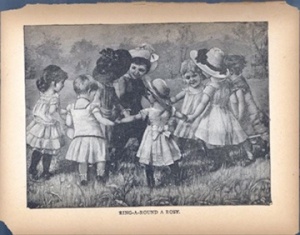
With DiGRA ’13 coming up in 2 weeks, I went searching for an accessible version ringroundrosey from diglib fsu eduof my keynote at DiGRA ’05, for which the short piece “The Last Word on Ludology/Narratology,” which I posted a few weeks ago in text and slides,  was just the preface.  The text of the keynote itself, “Games as Joint Attentional Scenes”  can be found on the Google Books site, since it was published as a chapter in Words in Play edited by Suzanne De Castell and Jennifer Jenson.  Continue reading
Molyneux’s Curiosity Game: why did anyone play?

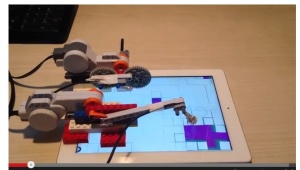
Now that game auteur Peter Molyneux‘s massively mobile cube clicking game, Robot playing CuriosityCuriosity -What’s Inside the Cube?, is over we are left to puzzle over its odd success.  The gameplay was so mindlessly repetitive that it could be performed by a simple robotAnd yet millions of people downloaded it to their iPhones and iPads and clicked away at billions of pixelated squares, and 30,000  of them were still at it almost six months after the release date when the game came to an end last Sunday.  What would make a human do it?  I think there were 4 main motivators. Continue reading

Is cat poop the same kind of medium as videogames?

There has been a lot of twitter chatter this week about an endearing rant by Darius Kazemi with the arresting title of Fuck Videogames aimed at encouraging frustrated game designers to embrace other forms of creative expression.
fkvideogames

Clearly this is a timely message, and probably a mark of the success that this active community of practice has  had in encouraging creative expression in videogames.

I don’t quarrel with Kazemi’s main point — and in fact I’ve often said that there is no hierarchy of media. No individual book, for example, is more valuable than any individual game (or film or TV show) just because it is expressed in lengthy text passages instead of interactive bits or moving images.   But Kazemi isn’t talking about books or films. He is talking gelato and cat poop — which I do indeed have a problem with.

Continue reading

Design Exercise: Agency in an Interactive Model

Choose one of the interactive models below or another of your choosing, and play  through multiple turns. If possible, replay it with different settings. Post an illustrative image and short description of how well or badly the model creates the experience of agency.

When you approach the model do you  have specific expectations of the kinds of outcomes it can have and the kinds of decisions you will be able to make? If so, where did these come from? Does the model draw on these expectations? How does the model communicate to you what actions you can take? How does it communicate the connection between your actions and the outcomes the systems produces?  Are there other ways the same system could be modeled? How would the interaction be structured in a model that reflected a different interpretation of the same real world system?

Note that agency does not mean ease of accomplishing a particular goal within the scenario.  Making some outcomes difficult or even impossible to achieve can create the experience of agency if the obstacle represents a meaningful interpretation of the system being modelled.

Examples:

Lemonade Stand  or any other version of it or any similar  “Tycoon” game

Fatworld

Kabul Kaboom

Sim City

Design Exercise: Legacy Conventions

Good or Bad Use of Legacy Conventions

For any digital artifact (e.g. a website, a digital camera, a digital cell phone), chose a particularly good or bad example of the use of one or more media conventions  (e.g. headlines, screen overlays, video control icons, keyboard layout) adapted from a legacy media form (e.g. print, movies, an analog camera, a hard-wired
analog phone). Make an image that focuses on the adapted legacy conventions and justify your choice as a particularly good or bad design example. What function does the convention serve that is common across media? How does its use change when it is moved from the legacy format to the digital medium?

How to Use the Design Exercises on this Site

The Design Exercises on this site, like the Design Explorations in the book, are appropriate thought exercises for designers which should help them to think outside their disciplinary training and focus on the collective process of inventing the medium.

For students, these Design Exercises are appropriate for short weekly assignments to develop the habit of critiquing design with carefully chosen words and specific examples. A good way to organize this assignment is to have students submit a 50-200 word text and an image with link to an online video, app,  or live website as appropriate, and to have them look at one another’s submissions by posting them to a shared page, like a wiki or a page generated by php from a shared folder. They are a good complement to courses that also include substantial hands-on project development.

The Design Explorations in the book can also be used in the same way but they tend to be more open-ended and time-intensive group activities, suitable for an in-class design lab or longer-term student project development.

Return to the Holodeck

In the 14 years since the publication of Hamlet on the Holodeck, there has been a rich and diverse expressive practice at the intersection of storytelling and interactivity.  This talk, which I gave as part of Georgia Tech’s GVU Brown Bag series in October 2011, surveys some representative examples of computational narrative forms and identifies  promising areas for innovation.

Should designers support or subvert users’ culture?

In the first wave of digital invention it was a rallying cry to proclaim that “information wants to be free.”  Of course what this really meant was that a certain subculture of educated people, mostly in universities, wanted  to access and share information without having to pay for it. This cultural attitude has produced useful online resources like Wikipedia and it has also produced high visibility arrests for media piracy and endless litigation against the Google Book Project.  We now know whatever “information” may want, rights holders often want to be paid.

Princeton researcher Janet Vertesi studies the cultural context of scientific investigation at NASA.

I was reminded of this change in perspective recently by Janet Vertesi, who was at Georgia Tech speaking about her illuminating research on knowledge cultures at NASA. Vertesi studied two projects which collected very different configurations of knowledge, mirroring the very different social organization of the investigating teams. One team which divided up the ownership of individual instruments and had a highly politicized decision making process collected data with great breadth but little coherence; a second team that shared a common instrument set and made decisions by consensus collected data that was highly integrated and detailed but narrow in scope. Vertesi’s presentation made it clear that there was no such thing as objective data, and that knowledge reflected cultural organization.  It was Vertesi’s very sensible position that designers must heed such differences in  cultural configuration or risk creating tools that do not fit the user group. Continue reading

The Future of the Book is Too Narrow a Question

I am often asked to comment on the Future of the Book. As someone who has just written a very large book that took a great deal of time to write and that I hope will be useful to many people, I sympathize with the impulse to equate knowledge-transmission-by-print-on-paper with KNOWLEDGE itself. But this is a mistake. Continue reading